Card number 60 has been written in German and sent to Herford, a town located in the Northeastern part of North Rhine-Westphalia.
The region is also known as Wittekind's land, as the last fights of Wittekind's Saxon tribes against Charlemagne took place here. He is believed to be buried in the neighbouring town of Enger.
Hooray! We have received a festive card from Munich,
the capital of Bavaria in Germany, 1,625 km away!
Danke schön Charlotte for this card showing one of the
best known festivals in Germany, the Oktoberfest, the world's largest beer
festival held annually from late September to the first weekend in October.
More than 6 million people from all over the world attend the festival every
year and enjoy numerous attractions, such as amusement rides, games and a wide
variety of German dishes like Schweinebraten
(roast pork), Schweinshaxe
(grilled ham hock), Brezen (pretzels)
or Knödel (potato or bread
dumplings).
Munich is the third largest city in Germany, after
Berlin and Hamburg, and the 12th biggest city of the European Union, with a
population of around 1.5 million.
MUNICH
IS FAMOUS FOR...
…hosting the 1972 Summer Olympics, where the Munich
Massacre took place.
… being a
leading location for science and research with a long list of Nobel Prize
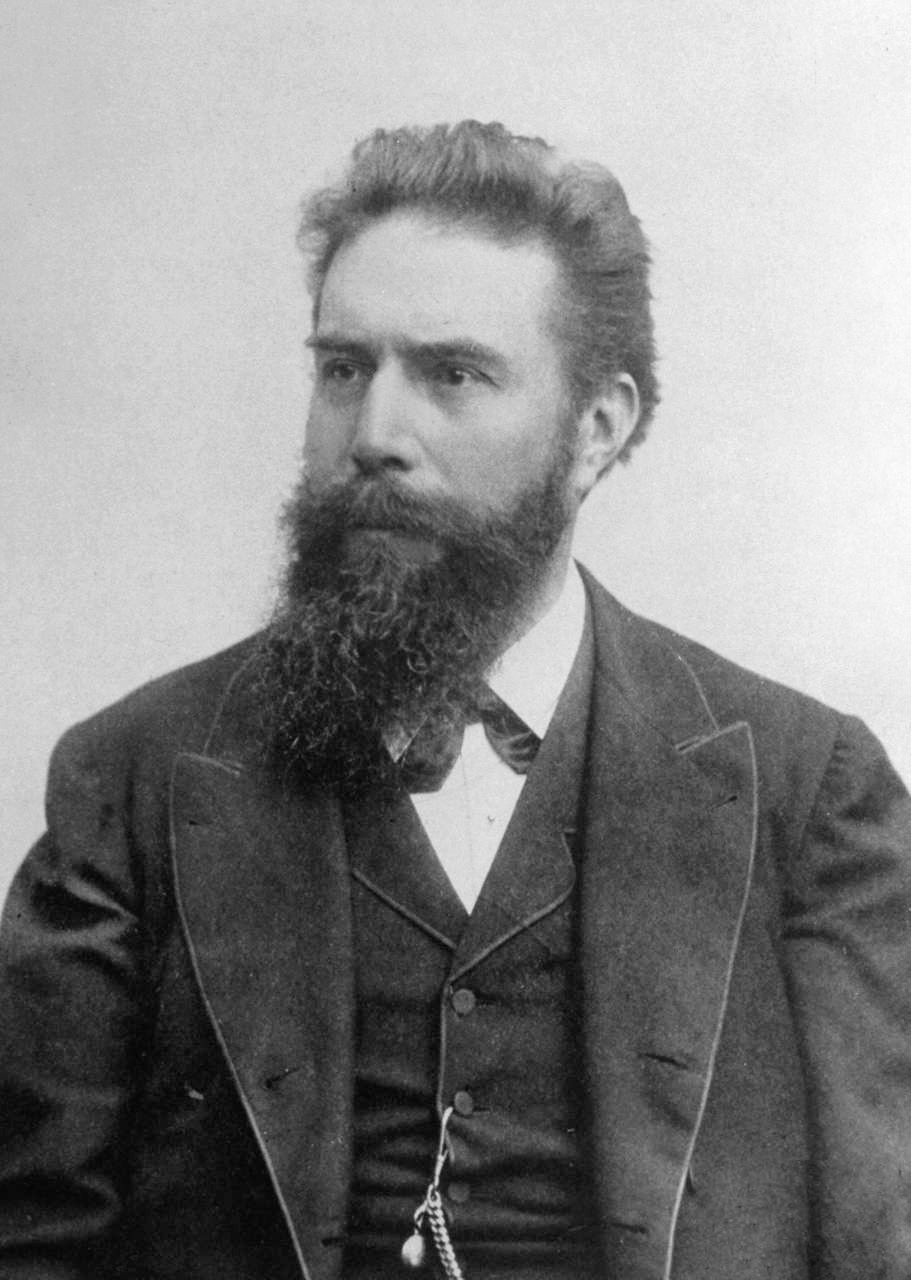
laureates from Wilhelm Conrad Röntgen in 1901 to Theodor Hänsch in 2005.
…the Oktoberfest, which attracts millions of people
visiting its beer tents ("Bierzelte") and fairground attractions. The
Oktoberfest was first held on 12 October 1810 in honour of the marriage of
crown prince Ludwig to Princess Therese of Saxe-Hildburghausen. The festivities
were closed with a horse race and in the following years the horse races were
continued and later developed into what is now known as the Oktoberfest.
The NeueRathaus (New Town Hall) is a magnificent
neo-gothic building from the turn of the century which architecturally
dominates the north side of Munich’s Marienplatz.
On a hill at the west end of the Theresienwiese sits
the 18-meter-high (36 feet) bronze statue of Bavaria. In the head of the female
symbol and earthly patron of Bavaria is an observation deck with two benches.
When the food market of the city had grown too large
for the central square Marienplatz, King Maximilian I issued a decree in 1807
to have it moved a few metres to the south-east, to the square between
Heiliggeist-Kirche and Frauenstraße. Charity buildings that had once belonged
to the church were demolished to make way for the market square or
"Markplatz", which only much later came to be known as
"Viktualienmarkt" or victuals market.
Site of the 1972 Olympics, this landscaped park
contains sport facilities, lakes, bicycle paths, concert venues, restaurants
and a football stadium, as well as its landmark "tent-style" roofs.
"The Kirche St. Peter (“Church of St. Peter”) is
one of Munich’s landmarks, the oldest parish church in the city, and is known
affectionately by the locals as Alter Peter (“Old Peter”). The church stands on
a hill called Petersbergl, which is the only noteworthy elevation within the
Munich’s historic Old Town.
The baroque palace in the west part of Munich was the
summer residence of the Bavarian monarchs. Five generations of Wittelsbach
rulers were involved in the construction of this stately ensemble, which houses
several outstanding collections. With its lavishly decorated interior and the
famous "Gallery of Beauties" commissioned by Ludwig I, the palace is
one of Munich's favorite attractions. Among the highlights are the former
bedroom of King Ludwig II and the impressive banquet hall with fine ceiling
frescoes by Johann Baptist Zimmermann.
Hannover is a city found in Lower Saxony, Germany. It
is located 52.37 latitude and 9.73 longitude and it is situated at 57 meters above
sea level. Hannover has a population of 515,140 making it the
biggest city in Lower Saxony.
HANNOVER IS FAMOUR FOR…
... being the place where Hochdeutsch, the most standard German, is spoken.
... The CeBit, the largest and most internationally
represented computer expo.
Herrenhausen Gardens are Hannover’s most famous
attraction and have been a striking example of grand horticultural style for
more than 300 years.
The centrepiece, the “Great Garden”, is the most
important baroque garden in Europe and is a magnet for tourists from all over
the world. Just like the ladies and gentlemen of the court in centuries gone
by, visitors today can stroll around amidst opulently designed beds, splendid
sculptures and artistically clipped, illuminated hedges. Water features can be
heard babbling in hidden corners while the Great Fountain rises to an
impressive height of 70 metres. Originally created by Electress Sophia as the
“Grand Jardin de la Leine”, the Great Garden is one of the few baroque parks
which has retained its basic structure until today.
In the days before the Second World War there was a
large old town in the centre of Hannover with narrow lanes and many
half-timbered buildings from the Middle Ages. A lot of poor people lived there
under bad conditions. Ordinary Hannoverians stayed away from the old town
because they also considered it a place of crime and demimonde. The historic
value of the picturesque old buildings interested but a few.
The old town of Hannover extended from Steintor to
Aegidientorplatz and is today only recognizable by its elliptical shape. The
old main streets like Osterstraße, Schmiedestraße, Knochenhauerstraße,
Burgstraße, Leinestraße and others are linked by numerous lanes and join again
at the old gates as was common in German merchants' settlements in the Middle
Ages.
The Marktkirche - the church at the market place - was
built in the 14th century. The marketplace was at the very centre of urban
expansion in Hannover. Merchants and craftsmen used to live around here. In the
14th century, the Marktkirche ("The Church at the Marketplace") was
built here. Together with the Old Town Hall to the right they are considered to
be the southernmost specimens of the "North German neo-Gothic" style.
A historical building dating back to 1500 a.d. The old
Town Hall was built over a period of more than 100 years. The earliest part
(from 1410) overlooks the Schmiedestrasse (Blacksmith Street), the later wing
next to the market was erected on the foundations of the 13th century trade
hall. The adjacent wing in the Koebelinger Str. is called the "Chemists'
Wing ("Apothekenflügel"), because it was the location of the Town
Hall's pharmacy. This wing was later rebuilt in Italian Romanesque style, after
a citizen's "action group" led by a well known neo-Gothic architect,
Conrad Wilhelm Hase, managed to save the entire building from demolition in
1844. Hase was subsequently commissioned to renovate the remaining wings in
their original style of 1500, with its exceptional gothic gables and the
ornamental frieze.
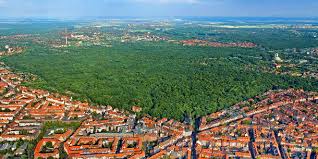
Europe's largest city forest in the heart of Hannover.
At around 640 hectares, Hannover possesses the largest forest in the heart of a
city in Europe – even Hyde Park in London and the Bois de Bologne in Paris do
not compare. This green lung mostly lies close to the city centre in the
eastern part of Hannover. With a convenient web of pathways and hundreds of
benches for resting, with lakes, lawns for sunbathing, children's playgrounds
and forest inns, the Eilenriede fulfils many needs of citizens seeking
recreation.
LIFESTYLE
Hannover has plenty to offer: the highest quality of
life and an excellent environment for daily work and business growth. Renowned
universities, international trade fairs and strong high-tech industries make
Hannover one of the state-of-the-art locations in Germany. More than 1 million
people live here. Within a radius of 500 km, there are no less than 130 million
people, the four biggest European cargo ports, five capital cities and all of
Germany's major industrial centres.
Enjoy a Hannover timelapse image film - one day in the
vibrant city of Hannover in just 5 minutes!
Great start to the week with a postcard showing one of the best known Galician landmarks, the cruceiros!
María Pérez, an ESO 4 student, has written the card on behalf of all the members of Ciencia Activa, a successful school project whose aim has been and still is to approach science in a meaningful and motivating way!
Two other members of Ciencia Activa, Outeriño and Ledicia Blanco, have done some research on the Galician Cruceiros and have share their findings in DISCOVER OURENSE.
They have also explored the destination of this card, the city of Leipzig in Germany, and have posted an interesting text in EXPLORING PLACES. Thank you, guys!
Another Ciencia Activa student, Carlos Cuesta, has very kindly recorded a podcast with further information about Leipzig. Listen to Carlos here. Thanks a million!
Here's what Alex Outeriño and Ledicia Blanco, ESO 4 students, have found out about this city. Thanks for letting us know, guys!
WHERE IS LEIPZIG?
Leipzig is the largestcityin thefederal stateofSaxony,Germany. Leipzig lies at the confluence of the riversWhite Elster,Pleisse, andParthe, in theLeipzig Bay, on the most southerly part of theNorth German Plain, which in turn belongs to theNorth European Plain.
...its large parks. Leipzig Botanical Garden is the oldest of its kind in Germany. It contains a total of some 7,000 species, 3,000 comprise ten unique collections.
Many other well-known figures worked for much of their life in here, including Johann Sebastian Bach, who died in Leipzg in 1750, and Felix MendelssohnBartholdy, philosopher Friedrich Nietzsche, the Nobel Prize in physics Werner Heisenbergorthe and car manufacturer August Horch.
The historic downtown area of Leipzig features arenaissance styleensemble of buildings from the 16th century, including the old city hall in the market place.
Leipzig's zoo is one of tne of the most modern zoos in Europe with approximately 850 different species. It houses the world's largest zoological facilities for primates(Pongoland). Gondwanaland is the world's largest indoor rainforest hall.
The city's new administrative building was built upon the remains of thePleissenburg, a castle that was the site ofthe 1519 debatebetweenJohann Eck and Martin Luther. It is also Germany's tallest town hall.