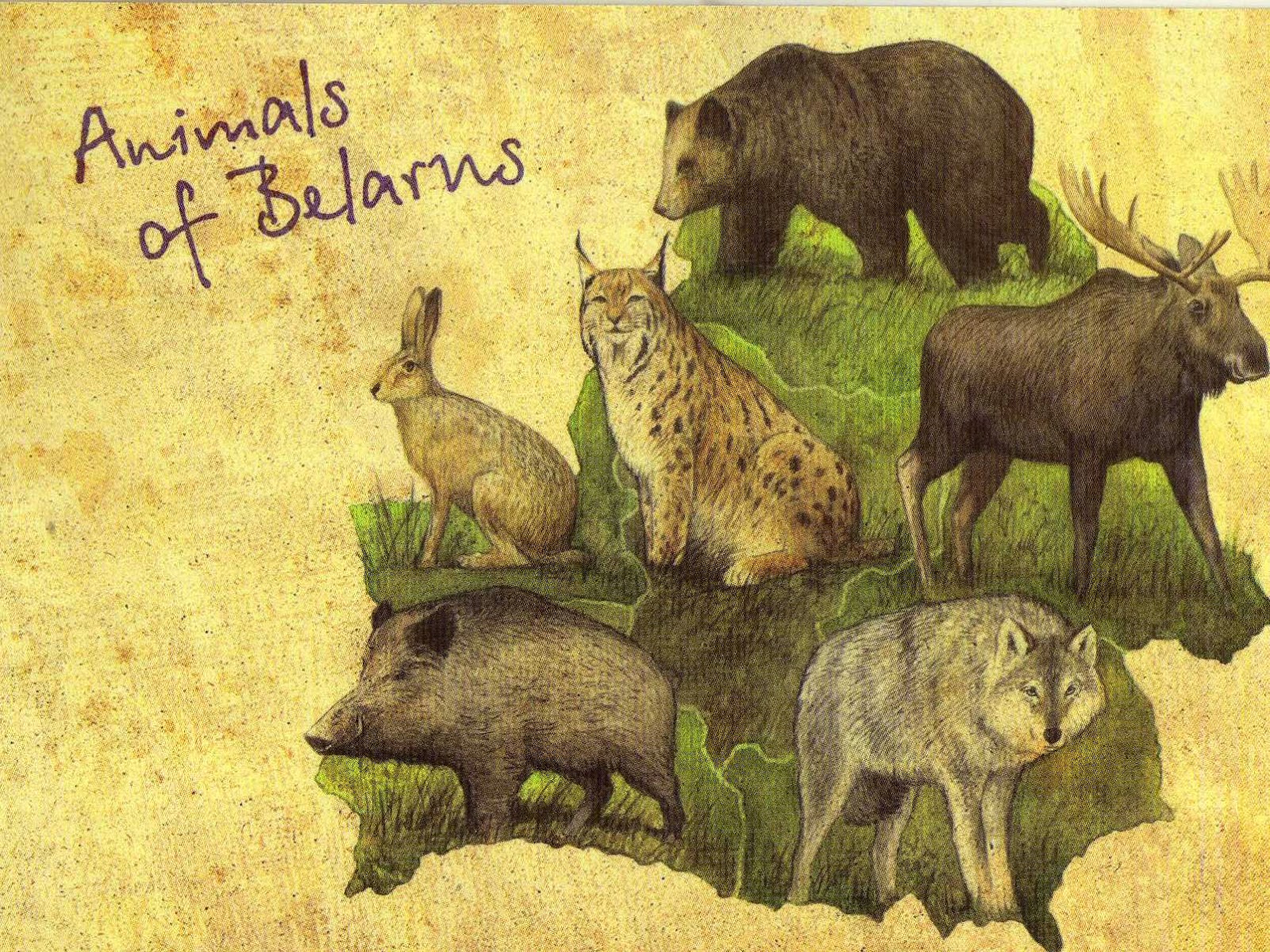
Anna, from Gomel (Belarus), has sent us this original
postcard featuring some of the most common mammals in her country: wolves,
hares, moose, wild pigs, lynx and grizzly bears.
Gomel was also the destination of postcard 18 so you
can click HERE to read about Anna’s hometown.
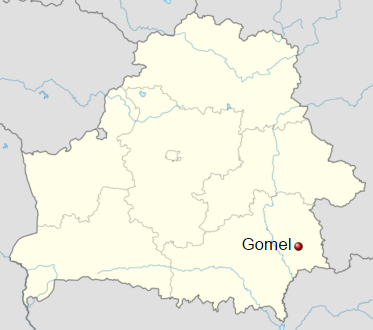
Gomel is the administrative center of Gomel Voblast
and the second-largest city in Belarus. Its area is 135.3 km2. The Gomel region of Belarus borders Russia in
the east and the Ukraine in the south.
Around a third of the region is agricultural land.
1.424,0 million people live in the Gomel region. The main religion is Orthodox
Christianity. Gomel is the main city in the region, which is divided into 4
districts. The Gomel region is divided into 21 districts and there are 17
cities, 18 towns and 2608 villages.
In 2011 Gomel became the Belarus and CIS Capital of
Culture.
GOMEL IS FAMOUS FOR...
...Being the birthplace of Gavriil Vashchenko, a
painter and a pedagogue, one of the founders of the monumental decorative art
school. Person of the Year 1992 and Person of the 20th Century (1993) as
acknowledged by the International Biographical Center of Cambridge. Person of
the Year 1994 according to the American Biographical Institute. Born in the
village of Chikalovichi, Gomel Oblast (1928).
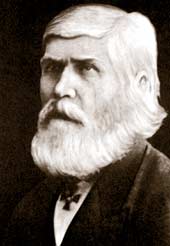
Another famous person born in Gomer was Iosif
Goshkevich, a diplomat, Orientalist, explorer, the first Consul of the Russian
Empire in Japan and the author of the first Japanese-Russian dictionary.
Several species of insects and the gulf in North Korea (Chosan-man) were named
after him. He was born in Rechitsa District (Gomel Oblast) in 1814. The 200th
birthday of Iosif Goshkevich was included into the UNESCO Calendar of Events
for 2014-2015.
This palace is one of the most beautiful examples of architecture in Belarus. Currently the unique museum complex in central Gomel unites the palace of the Rumyantsevs and the Paskeviches, a chapel and a burial vault, a winter garden, a watchtower and a picturesque old park.
The National Park Pripyatsky is one of the most popular tourist attractions in Belarus.
Wild nature fans go there for captivating photo safaris because you can see a truly impressive number of animals in their natural habitat there.
The national park is home to 51 species of mammals: wild boar, deer, elk, doe, hare, fox, muskrat, raccoon dog, beaver… Including rare species: European bisons, European mink, European lynx, badger, garden dormouse, common dormouse, hazel dormouse.
The National Park Pripyatsky has the international status of the key ornithological territory. It is home to 256 species of birds (79% of all the birds in Belarus), including 65 species in the Red Book of Belarus.
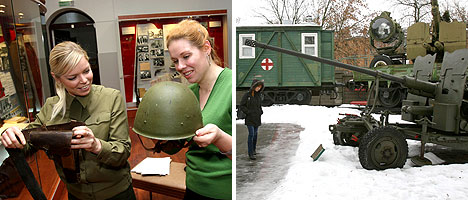
The military history museum was opened in Gomel in 2005, the year when Belarus celebrated 60 years since its liberation from the Nazi invaders. The exposition covers Belarus’ history from ancient times to the present. It features weapons, ammunition, gear and uniforms, movies, documents, manuscripts and photos. The pride of the museum is the Partisans’ Town located in the open air, as well as the exposition of the 20th century weaponry.
Gomel Palace & Park Ensemble
Gomel Palace
This is one of the oldest and famous museums. The Rumyantsev-Paskevich Residence is the main historical and cultural site of Gomel Palace and Park Ensemble. The ensemble is an architectural monument of the late18th― early19th century.
There are various festivals of arts – regional, republican and international levels in the region.
LIFESTYLE
The Gomel region is one of the most advanced industrial regions in Belarus. There are about 300 medium and large enterprises, which between them account for 22% of the total industrial output of the Republic of Belarus. Approximately 70% of all production is exported, and Gomel enjoys trading links with more than 100 countries.
In 2011 Gomel became the Belarus and CIS Capital of Culture. These statuses underline the high level of Gomel achievements in cultural sphere. The Gomel region has 70 state newspapers and magazines, together with long-established regional television and radio stations.
Álex has sent this lovely postcard showing Allariz's beautiful landscape by the Arnoia River. Taysa and her daughter Verónica, our friends in Gomel (Belarus), are sure to find it charming!
Alex's postcard will travel 2,887 kilometres before reaching its destination!
Please, click EXPLORING PLACES to read what Álex has found about this Belarusian town. If you want to see some pictures of Allariz's charming landscape, go to DISCOVER OURENSE.
Minsk is the capital
and largest city of Belarus, situated on the Svislach and Nyamiha rivers. It
has a population of 2,002,600.
Location of Minsk
WHAT IS MINSK FAMOUS FOR?
Minsk is the
administrative and economic capital of Belarus. It has developed industrial and
services sectors which serve the needs not only of the city, but of the entire
country. According to 2012 statistics, Minsk-based companies produced 21.5% of
electricity, 76% of trucks, 15.9% of footwear, 89.3% of television sets, 99.3%
of washing machines, 30% of chocolate, 27.7% of distilled alcoholic beverages
and 19.7% of tobacco goods in Belarus.
PLACES TO VISIT
Independence Square
Independence Square is over 7 hectares big, which
makes it one of the biggest squares in Europe. Here we can find the Government
headquarters, Belarusian State University and the Minsk metro headquarters.
Independence Avenue
One of the landmarks of Minsk is Independence Avenue,
which crosses the city from the center to the north-east. The avenue is 15km
long, which makes it one of Europe’s longest city thoroughfares. It passes
through the city’s biggest squares: Victoria Square, Independence Square,
October Square and Yakub Kolas Square.
Red Church
The Red Church was built in 1910 by order of a local
aristocrat. The church was named and consecrated in memory of his deceased
children, Simon and Helen. His daughter Helen had seen the future church in her
sleep and drafted its sketch.
National Opera and Ballet Theatre of Belarus
Located in the city centre, this theatre is is one of Europe’s biggest theatres and the architectural landmark of Minsk. It is also famous for its talented performers, who play a great role in disseminating Belarusian music and ballet.
LIFESTYLE
Minsk is a multicultural city. Its ethnic groups
include Belarusians (75%), Russians (15.7%), Ukrainians (2.4%), Poles (2.1%)
and Jews (1.6%).Some more recent communities have developed as a result of
immigration. The most prominent are immigrants from Armenia, Azerbaijan and
Georgia, each numbering about 2,000 to 5,000. A small but prominent Arab
community.
If you want to know more about Belarus and its capital city, watch this video:
Our fifth postcard is travelling to Minsk, the capital and largest city of Belarus.
This time our recipent is a family with three members: Maria (mum), Dimitri (dad) and Alexandra (daughter). Would you like to know more about their city? Go to EXPLORING PLACES!
Hope the family likes this illustration by R. Cachaldora depicting Ourense's Rúa dos Fornos.
You can find more details about this popular street in our section DISCOVER OUR HOMETOWN.