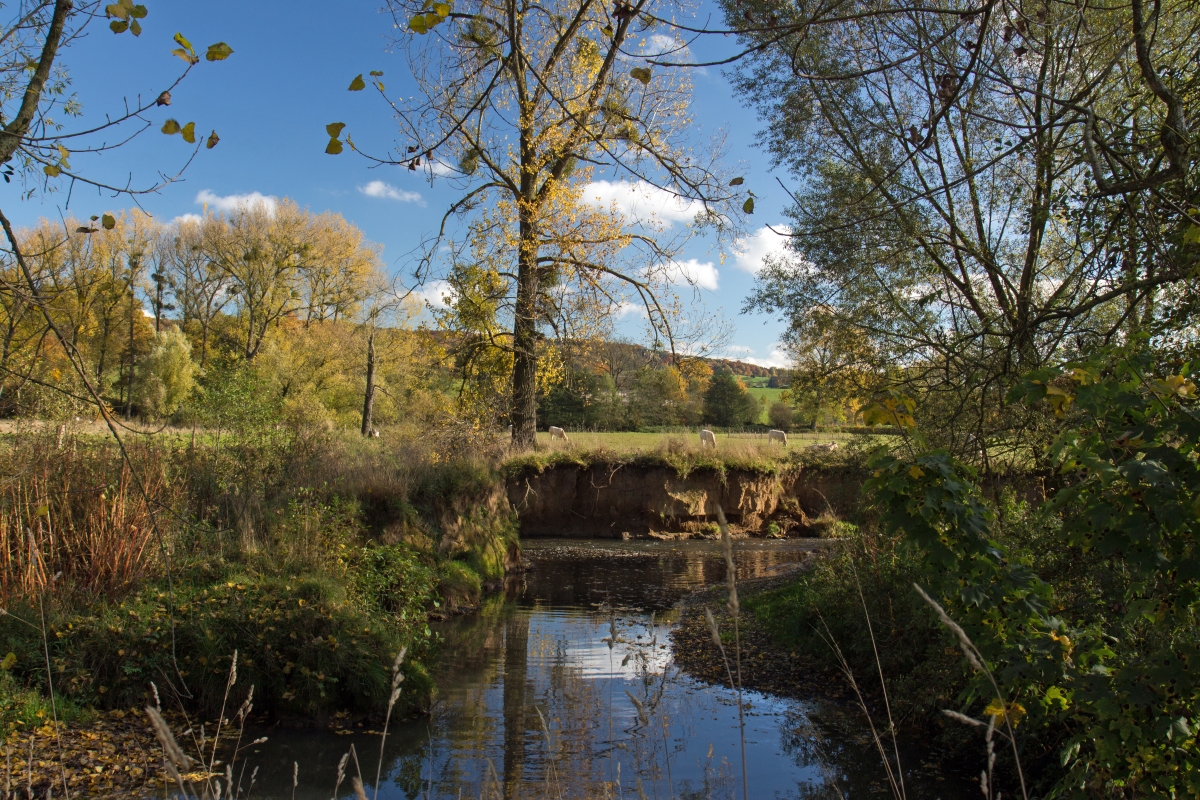
Now that summer holidays are over, we return to postcrossing
with a card from Buurmalsen, a village in the Dutch province of Gelderland, 1,450 kilometres
away!
The postcard Carla has sent us features a competition
between the eleven villages that are part of the province, the Elfdorspenspel,
which was won by Carla's village this year!
Remember you can find more information about Buurmalsen in EXPLORING PLACES!
Buurmalsen is a village in the Dutch province of
Gelderland. It is a part of the municipality of Geldermalsen, in the central
eastern part of the country.
The Museum was established in 1938 and was named after
its founder, Helene Kröller-Müller, a Germanwife of the Dutch industrialist
Anton Müller.
The Kröller-Müller Museum should not missed, not only because
of its invaluable collection of modern art, which includes several works by Van
Gogh an Mondrian and interesting modern sculpture garden, but also because of
its park
The
HogeVeluwe National Park
The park covers 5,500 hectares of woodland, heath,
grasslands and shifting sands, and is the natural habitat for deer, moeflon and
wild boar. On foot or on one of the free White Bicycles, you are free to roam
around in nature, to naturally arrive at the museum, the finest treasure-house
the Netherlands has to its name. The free White Bicycles (1,800 in total) are
stationed at the three entrances to the park, at the visitors’ centre and at
the museum.
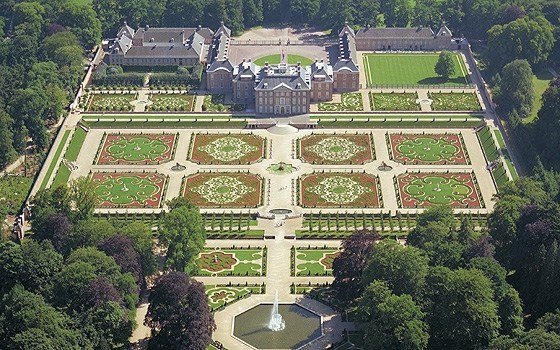
Stadtholder William III had Het Loo Palace built on
the Royal Estate Het Loo as early as 1685. It served as the royal family’s
summer residence for a long time, but has been converted into a magnificent
museum since 1984. The palace’s decorations alone are worth a visit, and the
gardens are absolutely stunning.
The Netherlands Open Air Museum in Arnhem features
eighty historic houses, farms and windmills. The museum has been designed to
create a highly realistic impression of daily life for the average Dutchman over
the past few centuries.
LIFESTYLE
Gelderland is a very peaceful province with lots of
lovely villages like Buurmalsen. This province is full of amazing places and
views.
Our next stop is Nijmegen, in The Netherlands, 1,477 kilometres away!
Aarón Conde (4ºESO B) has written a postcard featuring
one of the most popular and appreciated vegetables in Ourense and in Galicia as
a whole: "os grelos". Hope Laura likes it!
Grelos or turnip greens are leafy greens with a signature sharp flavour which offer a wide range of health benefits through their supplies of antioxidants, vitamins and minerals. Click DISCOVER OURENSE to learn how the ourensanos cook grelos to prepare delicious dishes.
If you want to know more about Nijmegen, Laura's hometown, visit our section EXPLORING PLACES.
Nijmegen is among
the three oldest cities in the Netherlands, and in 2005, it celebrated 2,000
years of existence. The municipality is part of the "Stadsregio
Arnhem-Nijmegen" a metropolitan area with 736.107 inhabitants.
The triangular Grote
Markt lies in the center of old Nijmegen. In the square there is a statue of
Mariken van Nieumeghen, the chief character in the 15th century mystery play of
that name.
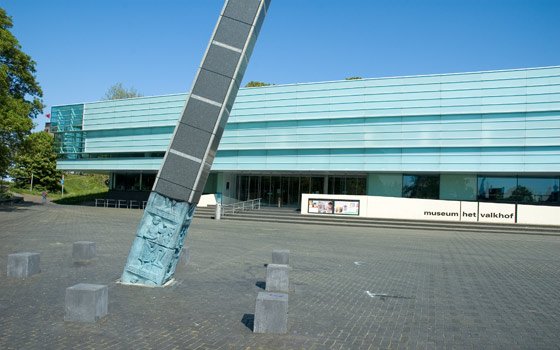
The museum is
situated in the town's centre, at the edge of the historic Valkhofpark. This
was once the site of a Roman encampment. Emperor Charlemagne later built a
fortress on this site.
Today it is an
exciting modern location for art and culture designed by the Dutch architect
Ben van Berkel. An imposing flight of stairs leads to the exhibition floor with
its light, airy spaces. The museum exhibition areas are totalling appr. 2700 m2
and house a large and important collection of Roman artefacts, plus an unusual
display of modern art and older works telling visitors all about the city’s
dynamic and eventful history.
The Quack Monument
- officially Marie Adolf Fountain. Also known under all kinds of unofficial,
dirty names.
The monument was
removed from its spot and hidden by the Council for many, many years under the
pretext that no place could be found for it due to the reconstruction of some
nearby streets.
This time capsule
contains information on the WWII Operation Market Garden and was sealed in
September 1974. It is due to be opened in September 2044.
LIFESTYLE
Nijmegen is
sometimes called "the most northern city of the south", because of its
Burgundian lifestyle. The presence of some 15,000 students gives the city a
youthful and lively character.
There is also a
wide range of cultural possibilities, from nine regional museums and historic
locations to large outdoor pop concerts in summer, cultural events and the
state-of-the-art cinema and theatre LUX. Furthermore Nijmegen has many
restaurants and bars.
The architecture
in the city centre is a mix of old and modern. Just outside the centre, there
are neighbourhoods with popular lofts and houses built around 1900 and in the
1930s. Green and spacious suburbs are located on the borders of the city and to
the north a completely new part of the city has risen in recent years. Many
villages surround the city in a rural setting.
Watch the video below, an amazing
time-lapse film showing everything we need to know about Nijmegen.
Groningen is the main municipality as well as the capital city of the most northeastern province of the Netherlands. It borders on Friesland to the west, Drenthe to the south, the German state of Niedersachsen to the east, and the Wadden Sea to the north. With a population of 197,823 (in 2014), it is the largest city in the north of the Netherlands.
An old city, Groningen was the regional power of the northern Netherlands, a semi-independent city-state and member of the German Hanseatic League. Groningen is a university city: it houses the University of Groningen (about 28,000 students) and the Hanze University of Applied Sciences (about 25,000 students).
GRONINGEN IS FAMOUS FOR... ...being a Hanseatic city.
In the fourteenth century, Groningen became a member of the Hanseatic League (1282-1669), a collaboration of merchants primarily from Germany, Scandinavia, England, Poland, the Baltic States, Russia and the Netherlands.
The Groningen Museum is located opposite the main central station and is the most high-profile museum in the Netherlands. This is due not only to its striking design by Italian architect Mendini, but also because of varying exhibitions, including works by Russian painter Repin, American photographer Andres Serrano, and Dutch photographer Erwin Olaf. The permanent collection consists of a large assembly of porcelain and works by the Groningen artists’ collective De Ploeg.
Nederlands Strip Museum (Dutch Comic strip Museum)
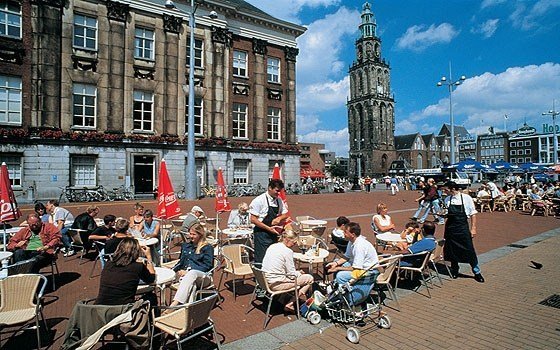
Martini tower has overlooked the city for over five hundred years. This fourth highest tower of the Netherlands can be climbed until the third gallery, during which visitors can also communicate with the tower via their mobile telephones
Over 50,000 students are registered at the Hanze University of Applied Sciences, Groningen and University, where they can choose from 175 courses. The Hanze University of Applied Sciences, Groningen is the largest university of applied sciences in the north of the Netherlands. Students from home and abroad can choose from over seventy training courses in almost any field. The State University has nine faculties, divided over 150 buildings in the entire city and surroundings. The State University is the third university in the Netherlands after Amsterdam and Utrecht.
The main square holds some gems, of which the Town Hall, dating from 1810, is the most dazzling. The string of cafes along the south side are perpetually buzzing.
LIFESTYLE
If you want to find out what Groningen has to offer to anyone living there, watch the video below.
It is a militaryairbase used by the Royal Netherlands Air Force(RNLAF). It is home to twoF-16 Fighting Falcon squadrons, 312 and 313. A third squadron formerly present at the base, 311, was officially disbanded on 27 September 2012.
Click here if you want to know more about the province in which Uden is located, North Brabant.









.svg)