The second postcard received this year has travelled
7,857 km!
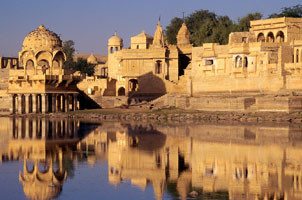
Its origin is Rajashtan, the largest state area in
India, and shows a vast magical place, the Thar Desert, also known as the Great
Indian Desert.
Thanks a million Kamran for letting us know about
Rajashtan’s folk music and some of its traditional instruments, like the Sindhi
Sarangi, an ancient bowed violin, and the traditional pies.
To know more about Rajashtan and its culture, visit our
section EXPLORING PLACES!
Rajashtan is located on the western side of India,
where it comprises most of the wide Thar Desert (also known as the "Rajasthan
Desert" and "Great Indian Desert") and shares a border with the
Pakistani provinces of Punjab to the northwest and Sindh to the west, along the
Sutlej-Indus river valley. Elsewhere it is bordered by the other Indian states:
Punjab to the north; Haryana and Uttar Pradesh to the northeast; Madhya Pradesh
to the southeast; and Gujarat to the southwest.
RAJASHTAN
IS FAMOUS FOR…
…its historical ruins: The Ruins of the Indus Valley
Civilization at Kalibanga; the Dilwara Temples, a Jain pilgrimage site at
Rajasthan's only hill station, Mount Abu, in the ancient Aravalli mountain
range.
…its natural parks: he Keoladeo National Park near Bharatpur,
a World Heritage Site is very well known for its bird life. Rajasthan is also
home to two national tiger reserves, the Ranthambore National Park in Sawai
Madhopur and Sariska Tiger Reserve in Alwar.
…its capital city: Jaipur, also known as Pink City,
located on the state's eastern side. With a population of 3.1 million Jaipur is
the tenth most populous city in India. Other important cities in Rajashtan are
Jodhpur, Udaipur, Bikaner, Kota and Ajmer.
Hawal Mahal (in English “Palace of Winds" or
"Palace of the Breeze") is a palace in Jaipur so named because it was
essentially a high screen wall built so the women of the royal household could
observe street festivals while unseen from the outside. Constructed of red and
pink sandstone, the palace sits on the edge of the City Palace, and extends to
the zenana, or women's chambers.
Amer Palace and Fort are located in Amer, a town located
11 kilometres from Jaipur. Constructed of red sandstone and marble up on a hill,
this opulent palace is laid out on four levels, each with a courtyard. The Fort
built to protect the palace is known for its artistic Hindu style elements.
With its large ramparts and series of gates and cobbled paths, the fort
overlooks Maota Lake, the main source of
water for the Amer Palace.
Birla Mandir is a Hindu temple located in Jaipur and
is part of one of the several Birla mandirs located all around India. The grand
temple is located on an elevated ground at the base of Moti Dungari hill.
Mount Abu is a
popular hill station in the Aravalli Range near the border with Gujarat. The
mountain forms a distinct rocky plateau 22 km long by 9 km wide. The highest
peak on the mountain is Guru Shikhar at 1,722 m and is often referred to as “an
oasis in the desert” as its heights are home to rivers, lakes, waterfalls and
evergreen forests.
This city has been acclaimed as the most romantic city
in the world. It is built around and on the Aravalli hills. Many lakes of the
city add to the beauty of the historical city.
LIFESTYLE
Rajasthan is culturally rich and has artistic and
cultural traditions which reflect the ancient Indian way of life. There is rich
and varied folk culture from villages which are often depicted and is symbolic
of the state. Highly cultivated classical music and dance with its own distinct
style is part of the cultural tradition of Rajasthan.
Rajasthan is known for its traditional, colourful art.
The block prints, tie and dye prints, Bagaru prints, Sanganer prints, and Zari
embroidery are major export products from Rajasthan. Handicraft items like
wooden furniture and crafts, carpets, and blue pottery are commonly found here.
Shopping reflects the colourful culture, Rajasthani clothes have a lot of
mirror work and embroidery.
The main religious festivals are Deepawali, Holi,
Gangaur, Teej, Gogaji, Shri Devnarayan Jayanti, Makar Sankranti and
Janmashtami, as the main religion is Hinduism. Rajasthan's desert festival is
held once a year during winter. Dressed in costumes, the people of the desert
dance and sing ballads. There are fairs with snake charmers, puppeteers,
acrobats and folk performers. Camels play a role in this festival.
A postcard from Goa, in southern India, has just arrived! Yippee!!
Thank you, Kbdessai, for this amazing postcard featuring the Ganges or Ganga, the great river in the plains of the northern Indian subcontinent. For centuries it has been the holy river of Hinduism.
If you want to know more about this fascinating country, visit our section EXPLORING PLACES.
Goa is a state located in the western region of India. India is a large country in South Asia. It is the seventh largest country by area, the second-most populous country with over 1.2 billion people.
The postcard received features the River Ganges or Ganga, the trans-boundary river of India and Bangladesh. The 2525 km river risesin the Western Himalayas and flows south and east through the Gangetic Plain of North Indiainto Bangladesh, where it empties into the Bay of Bengal.
Vanarasi is a holy city located on the banks of Ganga. There are nearly 100 bathing ghats(flight of steps) on Ganga at Varanasi. Varanasi is at its brilliant best by the ghats, the long stretch of steps leading down to the water on the western bank of the Ganges. Most are used for bathing but there are also several ‘burning ghats’ where bodies are cremated in public. The main one is Manikarnika where you’ll often see funeral processions threading their way through the backstreets to this ghat.
India is famous for being one of the most ancient civilization centers of the world, for its many gods and their rich history and influence on life, even in modern times.
In addition to the many temples, gods and scenic landscapes, India is famous for its spices, the Kashmir region, grand weddings, festivals, dances, Indian cuisine and Bollywood.
The Taj was built by Shah Jahan as a memorial for his third wife, Mumtaz Mahal, who died giving birth to their 14th child in 1631. The death of Mumtaz left the emperor so heartbroken that his hair is said to have turned grey virtually overnight. Construction of the Taj began the following year and, although the main building is thought to have been built in eight years, the whole complex was not completed until 1653.
With the Taj Mahal overshadowing it, one can easily forget that Agra has one of the finest Mughal forts in India. Construction of the massive red-sandstone fort, on the bank of the Yamuna River, was begun by Emperor Akbar in 1565.
There are temples at almost every turn in Varanasi, but this is the most famous of the lot. It is dedicated to Vishveswara – Shiva as lord of the universe. The current temple was built in 1776 by Ahalya Bai of Indore; the 800kg of gold plating on the tower and dome was supplied by Maharaja Ranjit Singh of Lahore 50 years later.
LIFESTYLE
India offers astounding variety in virtually every aspect of social life. Diversities of ethnic, linguistic, regional, economic, religious, class, and caste groups crosscut Indian society, which is also permeated with immense urban-rural differences and gender distinctions. Differences between north India and south India are particularly significant, especially in systems of kinship and marriage.
If you want to discover more about this multicultural country, watch the video below.




.jpg)